

Series 1: Power, Discipline, and Play - Unpacking the Societal Impacts of Web3 Gaming
First Chapter: The Disciplinary Power of Gaming: Challenging and Reinforcing Traditional Power Structures

Prelude
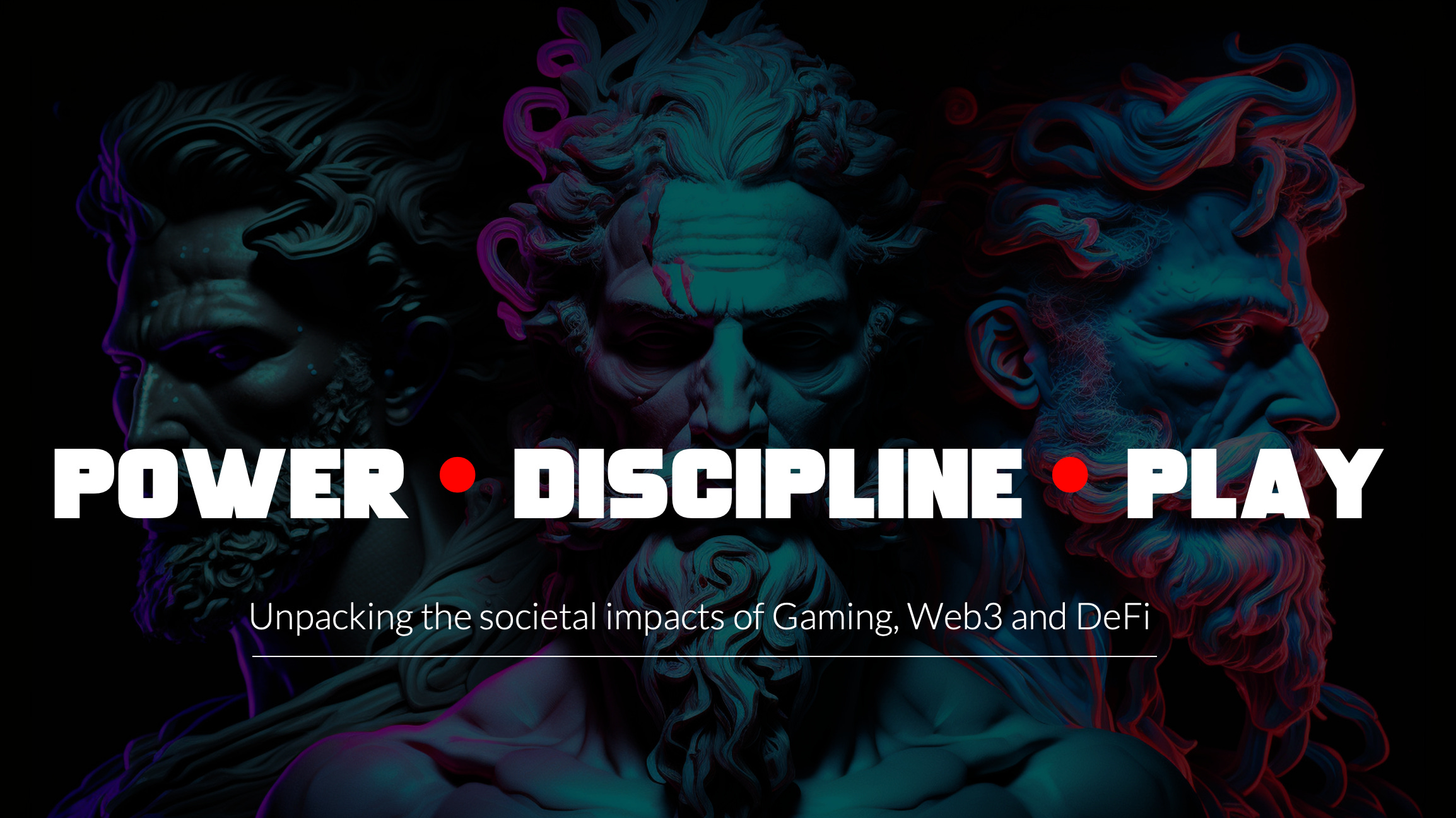
Welcome, dear friends, to "Power, Discipline, and Play: Unpacking the Societal Impacts of Gaming, Web3, and DeFi", my first mini-series that examines how gaming and Web3 are shaping our society, economy, and power structures.
Some of you might be thinking, “Are we talking about gaming here? Why so serious?”

Well, as many gamers already know, gaming is more than just mindless entertainment, and with the emergence of Web3 gaming, I believe disruption is coming for the traditional power structures in the industry.
We need to be paying attention.
And my goal with these posts is to have you engaged in the critical examination of how gaming and web3 could potentially impact society as a whole, and how we need to adapt or react to it.
So friends, join us on this journey of discovery as we explore the intricate relationship between power, discipline, and play in the world of gaming.
Gaming and Power
Picture a world where power dynamics constantly shift, challenging traditional systems and structures. A world where equity, transparency, and creativity are the norm. In this world, gaming has become a dominant force, shaping not just entertainment but society at large. Such is the vision of Web3 gaming that blockchain evangelists throw at us.
Interesting concepts and I am sure Foucault, known for exploring power structures, would undoubtedly have something to say about its potential to disrupt traditional power structures.
So Bitcoin started it all in 2009. Paving the way for decentralized digital currencies that could challenge traditional financial institutions and empower individuals.
Now, over a decade later and with blockchain gaming being developed and tested, we can think of the potential changes as a game of chess. In traditional gaming, the developers and publishers hold all the power, controlling the assets and setting the rules of the game. But with Web3 gaming, the power dynamic has shifted. It's like a game of chess where every piece has equal power, and the rules are open for debate.

This new paradigm creates new possibilities for more equitable and democratic systems. But as with any power shift also raises questions about discipline and regulation. Who is responsible for regulating these new decentralised systems? Wait! are decentralised systems supposed to be regulated? And if it’s not, how can we ensure that they are safe and fair for all gamers?
While I advocate decentralisation, I also believe governance and responsibility of decentralising power in gaming ecosystems is a crucial issue that demands serious consideration. As we move towards a more democratized and decentralized gaming world, there is a need for fairness and safety for all gamers. The current lack of regulation in the gaming industry is analogous to the wild west, where anyone can operate without consequences or accountability. You would agree that for an industry that affects over four billion people, it is unacceptable as a concept and that we must take action to create a system that protects gamers from abuse and exploitation.
And to achieve this, we must establish a framework for governance and regulation that is fair and effective. This involves collaboration between developers, gamers, and regulators to create a system that is transparent, accountable, and responsive to the needs of the gaming community.
Also, as gaming ecosystems become more integrated with blockchain technology, questions of subjectivity and identity also arise. How do we define ourselves in a world where our identities and actions are recorded and verified on a public ledger? This is not just about regulating the gaming industry; it is about creating a safer, more just and equitable world.
Overall, the emergence of Web3 gaming raises essential questions about the relationship between technology, power, and human agency. For example, what is the nature of power in both traditional and Web3 gaming, and how do they challenge or reinforce each other? How does the discipline of play and forms of subjectivity differ between conventional and Web3 gaming, and what are the implications for the agency of gamers?
But then, how does power operate within gaming communities? If you think about it, it's fascinating to consider how power operates within gaming communities and how it can impact our understanding of the world.
Let's work with a concrete example. Take the somewhat recent controversy surrounding the game "Cyberpunk 2077". The developers were criticized for their handling of diversity and inclusion in the game, which led to a backlash from the gaming community. This raises important questions about who has the power to shape the development and representation of games. Is it the developers who hold the power to create the world in which we play? Or is it the gamers who have the power to shape the discourse surrounding these games?
Well, I do not have the answer. All I can say is: keep those ‘woke peeps’ out of this 💩

But power dynamics in gaming extend beyond just representation. Social and economic inequality can lead to exclusion and marginalization in gaming communities. As a result, it raises questions about how to use gaming to promote positive social change and create a more equitable world.
Cue the now controversial “Play-to-earn”. For marginalized communities, Web3 gaming offers a way to break free from the economic and social barriers that have long held them back. By providing a platform for financial empowerment and ownership, P2E games can help create opportunities for those who have been traditionally excluded from the mainstream economy. It challenges the traditional power dynamics between developers, publishers, and gamers and creates new opportunities for revenue streams.
Say goodbye to your day job because, with games like Axie Infinity, you can earn a living wage just by playing the game (kek).
Sarcasm aside, as the Web3 community is licking its wounds and learning its lessons from 2022, I truly believe that Web3 can empower the unbanked and underbanked without impacting those who contributed to the economy of the specific currency that is paying out these rewards. Heck, we are building one such platform right now.
But this is not just about economic opportunity. Web3 gaming also presents new possibilities for creative expression and collaboration. With the decentralization of power in gaming ecosystems, gamers can take greater control over the games they play, shaping them to reflect their own identities and experiences. However, this again raises important questions about governance and regulation. Who is responsible for ensuring that these new decentralized systems are safe and fair for all gamers?
I do not have the answers yet, and I think only time, trial and error will provide us with them. And that we must approach this new frontier with a critical eye and a commitment to ethical responsibility.
And so, my friends, as we end the first chapter in this mini-series, we have explored the disciplinary power of gaming and the potential for Web3 gaming to challenge and reinforce traditional power structures. In addition, we have examined the philosophical implications of Web3 gaming and the questions that arise as gaming ecosystems become more integrated with blockchain technology. These questions are complex and require careful examination, but it is clear that Web3 gaming will have a strong impact on our society.
As we move forward in this mini-series, we must remember that power is not just about control but also about possibility. It is about the potential for change, for growth, for creating a world that is more just and equitable for all. The emergence of Web3 gaming is a step towards that world, but it is also a challenge to the status quo, a call to action for those who seek to disrupt traditional power structures and create something new.
Until next time, be well, be bold, and keep dreaming.